Skip to content

1:1 online · all major exam boards

English Literature tutoring, GCSE and A-Level

One-to-one English Literature tutoring for GCSE and A-Level, taught live online. Shakespeare, the nineteenth-century novel, modern texts, poetry, and the non-exam assessment at A-Level.

Taught by Leah Burgess, who read French and Spanish at St Edmund Hall, Oxford. Teaching is sold in blocks of 6, 12 or 24 teaching weeks.

See the fees Enquire Now
Mrs Leah Burgess in academic dress, Oxford

Mrs Leah Burgess. French & Spanish, St Edmund Hall, Oxford. Seven years and more of one-to-one teaching.

Our expertise

  • AQA
  • Pearson Edexcel
  • Eduqas
  • OCR
  • Cambridge IGCSE
  • AQA
  • Pearson Edexcel
  • Eduqas
  • OCR
  • Cambridge IGCSE

AQA, Pearson Edexcel, Eduqas, OCR and Cambridge Assessment International Education are the owners of their respective names and marks. They are shown here to say which specifications are taught. The Russet Collective is not affiliated with, approved by or endorsed by any awarding body.

GCSE · ages 11 to 16

Four components, and for most boards the book is shut.

Nearly every specification asks for the same four things: a Shakespeare play, a nineteenth-century novel, a modern text, and poetry — an anthology cluster plus unseen poems. Most of it is examined closed book, so the quotations have to be in the student's head, which changes what revision is for.

Shakespeare

Macbeth, Romeo and Juliet, The Tempest, The Merchant of Venice, Much Ado, Julius Caesar — the list varies by board. The question gives an extract and asks about the whole play, so the skill is moving outward from thirty lines without abandoning them.

The nineteenth-century novel

Commonly A Christmas Carol, Jekyll and Hyde, Jane Eyre, Frankenstein or Great Expectations. Context marks are lost here more than anywhere: bolted-on paragraphs about Victorian society score nothing, and context woven into the argument scores well.

The modern text

A twentieth or twenty-first century play or novel — An Inspector Calls, Blood Brothers, Lord of the Flies, Animal Farm and the rest. Usually an essay from a choice of two, and usually the question where a rehearsed answer is most visible to an examiner.

Poetry, set and unseen

A studied anthology cluster with a comparison, then one or two poems nobody has seen before. The unseen is the part that cannot be revised and the part most reliably improved: it is a method, practised weekly, and it transfers straight to the rest of the paper.

Boards taught

AQA (8702), Pearson Edexcel, Eduqas, OCR and Cambridge IGCSE Literature in English. Set texts, anthology clusters and open-book rules all differ, and Cambridge IGCSE in particular sets a different reading list from the domestic boards. The board and the texts go on the application, and the first session starts on the books your child is actually sitting.

A-Level · ages 16 to 18

Now the reading has to be yours.

The jump is real and it is not about difficulty of language. At GCSE a student is rewarded for a competent account of an agreed reading. At A-Level they are rewarded for a reading of their own, argued against other people's — which means engaging with criticism, with the period, and with the fact that intelligent readers disagree.

The examined papers

Structured differently by every board — by period, by genre, or by critical theme — but always requiring a pre-1900 text, usually Shakespeare, usually poetry and prose, and usually an unseen passage.

  • Comparison that argues a real difference rather than running two essays side by side
  • Criticism used as an opponent to argue with, never as a quotation to decorate a paragraph
  • Unseen prose and poetry under time, which is a procedure before it is a talent
  • Open-book papers, where knowing where a passage is beats knowing it by heart

The non-exam assessment

Twenty per cent of the grade, written across months, and the only part of the qualification where a student chooses their own question. That freedom is why it goes wrong: a question too large to answer in the words allowed, or two texts with nothing genuinely to say to each other.

Word counts differ by board — roughly 2,500 to 3,500 in total, sometimes as one piece and sometimes as two. Yours is confirmed before anything is drafted.

Nothing is written for a student. The work has to be their own and the school has to authenticate it; what happens here is the question, the shape, and honest marking of their draft.

Boards taught

AQA (both A and B specifications, which are genuinely different subjects in approach), Pearson Edexcel, OCR and Eduqas. Specification B's critical-theory strand in particular rewards a way of writing that specification A does not, and teaching one to a candidate sitting the other is worse than teaching nothing.

How a session happens

One to one, on Google Meet, and close enough to read the margin.

Distance learning usually means a face in a box and a shared document nobody is writing on. This does not. Leah shares her screen at full clarity and works on an iPad while you watch: the work is on the screen, and her pencil is moving across it in real time.

A student sees the sentence being crossed out, the arrow being drawn, the word being changed and the reason being written in the margin, in pencil, at the moment it happens — and can argue with any of it while the pencil is still on the page. It is the nearest thing to sitting beside somebody at the same desk, and for a good many students it is better, because the writing is the size of a screen rather than the size of a page.

An essay on To Kill a Mockingbird on an iPad during marking, with a phrase circled and lines highlighted, beside an Apple Pencil and a pair of glasses.
A constructed example, marked live on a shared iPad screen.
  • Live pencil annotation, on a shared iPad

    Handwriting, arrows, underlining and marginal notes, drawn while you watch — in pencil for anything that is a judgement, and in highlighter where a passage needs picking out. Pencil on purpose: a mark in ink is a verdict, and a mark in pencil is a suggestion a student is invited to argue with.

  • Clear screen, clear sound

    Text is shared at full resolution rather than as a blurred video feed, and the audio is good enough to hear an accent properly — which for a language lesson is not a nicety.

  • Practice set every week, and marked by hand

    Questions chosen against the paper your child sits next, not against the syllabus in order. Leah marks them herself and returns them, so the next session starts from what actually went wrong rather than from where the textbook happens to be.

  • Nothing to install, and no travel

    A browser and a link. Sessions run in the late afternoon and evening, UK time, and time zones are worked around rather than complained about.

  • A parent may sit in, always

    Without asking and without giving a reason. Leah holds an Enhanced DBS certificate and is the designated safeguarding lead.

Walk through a session step by step — what happens before it, on the shared screen, and afterwards.

Fees

Sold in blocks, so the reading has time to land.

Literature does not improve in a single session, because the improvement is in how a student reads before they write. A block gives that time a shape — the method first, then a text, then essays under timed conditions. The longer the block, the less each week costs.

What a teaching week is

Every week, the same three things happen.

  • A live one-to-one hour with Leah, online, marked in pencil on a shared screen while your child watches
  • Practice questions set every week, chosen against the paper your child sits next rather than the syllabus in order
  • That practice marked by hand by Leah and returned, so the next week starts from what actually went wrong in the last one
  • Support seven days a week between sessions, answered by Leah and by nobody else

The practice is not homework for its own sake. It exists so that the same mistake is not made twice: what comes back marked is what the next hour starts from, and over six, twelve or twenty-four weeks that is how a habit gets broken rather than described.

GCSE English Literature

6 teaching weeks

£705

Full rate

Half a term. One paper, or one habit that is costing marks, taken apart and rebuilt.

Most families choose this

12 teaching weeks

£1,199

15% off — you keep £211

A full term. Long enough for a technique to become the way your child writes rather than something they remember to do.

24 teaching weeks

£2,115

25% off — you keep £705

The full run to the examination, taken at a steady pace from now until the paper.

GCSE, Key Stage 3 and GCSE, ages 11 to 16. Sold in blocks of 6, 12, 24 teaching weeks. Weeks are teaching weeks: school holidays do not count against a block, so it pauses over half term and picks up afterwards rather than being quietly spent on a fortnight nobody taught. Payable in full once a block is agreed, and never before — there is no checkout on this site and nothing renews on its own.

A-Level English Literature

6 teaching weeks

£795

Full rate

Half a term. One paper, or one habit that is costing marks, taken apart and rebuilt.

Most families choose this

12 teaching weeks

£1,352

15% off — you keep £238

A full term. Long enough for a technique to become the way your child writes rather than something they remember to do.

24 teaching weeks

£2,385

25% off — you keep £795

The full run to the examination, taken at a steady pace from now until the paper.

A-Level, ages 16 to 18. Sold in blocks of 6, 12, 24 teaching weeks. Weeks are teaching weeks: school holidays do not count against a block, so it pauses over half term and picks up afterwards rather than being quietly spent on a fortnight nobody taught. Payable in full once a block is agreed, and never before — there is no checkout on this site and nothing renews on its own.

Any two subjects together

Ten per cent off both subjects.

Take any two subjects alongside each other and ten per cent comes off both blocks, on top of the discount the block length already carries. Any combination counts — Spanish with English Literature, French with English Language, both English subjects together. The saving is the same whichever two they are.

English Language and English Literature are the pairing this suits best, because they are two qualifications built on one skill: a student taking both is doing the same reading twice over, and what is learned about how a text is built in one paper is worth marks in the other. But the offer does not care which two subjects they are.

GCSE

  • 6 weeks each £635 + £635 £1,270 −£140
  • 12 weeks each £1,079 + £1,079 £2,158 −£240
  • 24 weeks each £1,904 + £1,904 £3,808 −£422

A-Level

  • 6 weeks each £716 + £716 £1,432 −£158
  • 12 weeks each £1,217 + £1,217 £2,434 −£270
  • 24 weeks each £2,147 + £2,147 £4,294 −£476

Prices shown are both blocks together with the ten per cent already taken off each, and the saving beside them. The two subjects do not have to be the same length, and the discount applies to whatever length each is bought at.
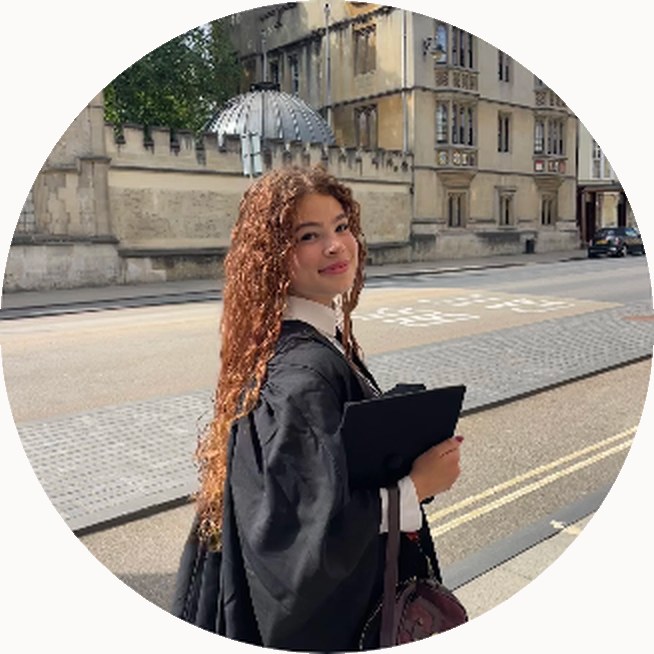
Mrs Leah Burgess in academic dress on the day she graduated from Oxford

Mrs Leah Burgess. French & Spanish, St Edmund Hall, Oxford.

Who teaches this

Trained in the tutorial system that English Literature is examined on.

An English Literature answer is an argument about a text, defended against the text. That is the Oxford tutorial, weekly, for three years — write something, then sit across a desk from somebody who has read the same book and be asked why you think so. Leah read French and Spanish at St Edmund Hall, which meant reading and arguing about literature in three languages rather than one. She has tutored for seven years and more, has worked under contract for schools, and marks in pencil on a shared screen while the student watches and argues back.

  • ReadFrench and Spanish at St Edmund Hall, Oxford
  • TutoringSeven years and more, one to one
  • SchoolsPrivate contracted work for schools
  • AbroadTime in schools across Europe, refining the languages in the places they are spoken
  • SafeguardingEnhanced DBS, and the designated safeguarding lead. Policy in full

Leah is the only person who teaches here. There is no pool of associates and no allocation: the person described above is the person in the session, every week. William Burgess, her husband and co-founder, runs admissions, student support and the finances, and does not teach.

Taught the way it is examined, by somebody examined that way.

Enquiring is free and takes about a minute. Leah reads every enquiry herself, and nothing is payable until a block is agreed.

Enquire Now

Six questions, about a minute, and you choose your time with Leah on the next screen.