Skip to content

1:1 online · all major exam boards

English Language tutoring, GCSE and A-Level

One-to-one English Language tutoring for GCSE and A-Level, taught live online. We cover both papers at GCSE and the full A-Level course, including the non-exam assessment.

Taught by Leah Burgess, who read French and Spanish at St Edmund Hall, Oxford. Teaching is sold in blocks of 6, 12 or 24 teaching weeks.

See the fees Enquire Now
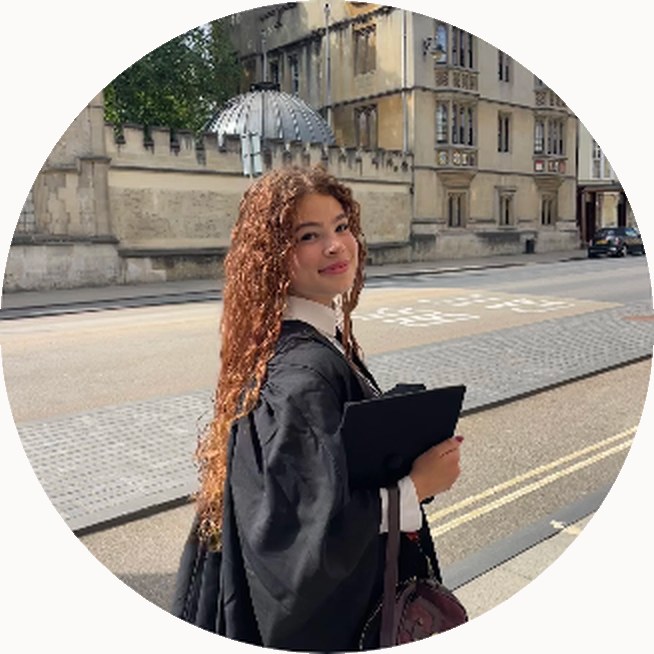
Mrs Leah Burgess in academic dress, Oxford

Mrs Leah Burgess. French & Spanish, St Edmund Hall, Oxford. Seven years and more of one-to-one teaching.

Our expertise

  • AQA
  • Pearson Edexcel
  • Eduqas
  • OCR
  • Cambridge IGCSE
  • AQA
  • Pearson Edexcel
  • Eduqas
  • OCR
  • Cambridge IGCSE

AQA, Pearson Edexcel, Eduqas, OCR and Cambridge Assessment International Education are the owners of their respective names and marks. They are shown here to say which specifications are taught. The Russet Collective is not affiliated with, approved by or endorsed by any awarding body.

GCSE · ages 11 to 16

Two papers, no texts to revise, and everything resting on technique.

There is nothing to learn by heart, which is why it is neglected. Both papers hand a student an unseen extract and ask them to do something with it under time pressure, and the difference between a five and an eight is almost entirely method: what you notice, in what order, and how you write it down.

Paper 1

Creative reading and writing

A literary extract, four reading questions of rising tariff, and then a piece of descriptive or narrative writing worth as much as the whole reading section. On AQA that is 1 hour 45 minutes and 80 marks, split evenly between the two halves; the other boards differ in the wording and hardly at all in the demand.

  • The structure question, which most candidates answer as though it were a language question and lose the marks outright
  • The evaluation question, where an opinion has to be argued rather than asserted
  • Descriptive writing that is planned in ninety seconds and paced across forty-five minutes

Paper 2

Viewpoints and perspectives

Two non-fiction texts from different centuries on a similar subject, a summary, a language question, a comparison of the two writers' attitudes, and then a piece of persuasive writing to a stated audience and form.

  • Comparing attitudes rather than techniques, which is the distinction the mark scheme turns on
  • Reading a nineteenth-century text quickly without being thrown by the register
  • Writing to a brief — a letter, an article, a speech — and holding the form for the whole answer

The spoken language endorsement

Assessed separately and reported separately, so it does not count towards the grade — which is why it is often prepared the night before. It is a presentation followed by questions, and it is prepared here as a piece of argument, because that is what it is.

Boards taught

AQA (8700), Pearson Edexcel, Eduqas, OCR and Cambridge IGCSE First Language English. The specifications are close cousins and the differences matter: Eduqas and Edexcel weight the reading questions differently from AQA, and Cambridge IGCSE runs a directed-writing task the domestic boards do not. Tell us the board on the application and the teaching is set to it from the first session.

A-Level · ages 16 to 18

A different subject wearing the same name.

A-Level English Language is linguistics. It has terminology, it has theory, it has data, and a student who arrives expecting more of GCSE spends the first term writing appreciative essays and being marked down for it. The move is from noticing what a text does to explaining why, with a framework and a name for each part.

Language and the individual

Textual analysis using the levels — phonology, lexis, semantics, grammar, pragmatics, discourse. Applying the right framework to the right feature is the whole of the marking, and picking three frameworks at random is the commonest way to write a long answer worth very little.

Diversity and change

Regional and social variation, gender, occupation, and how English has moved over time. On AQA (7702) this is Paper 2, and it wants named theory used as evidence in an argument rather than listed as a preamble.

Child language acquisition

Transcripts read against developmental stages and the competing theories. Marks go to candidates who let the data disagree with the theory rather than fitting one to the other.

The non-exam assessment

Twenty per cent of the grade, and the part nobody plans

A language investigation and a piece of original writing with a commentary — on AQA, fifty marks each, together worth a fifth of the A-Level. It is chosen by the student, which means it is usually chosen badly: a topic too broad to say anything about, or data collected too late to analyse properly. Choosing an investigation that can actually be finished is a session in itself, and it is the single highest-return hour on this course.

Boards differ on word counts and on what may be submitted. Yours is checked before a word is written, and nothing is drafted for a student — the work has to be their own, and the school has to be able to authenticate it.

Boards taught

AQA (7702), Pearson Edexcel, Eduqas and OCR, and the combined English Language and Literature specifications where a student is taking one of those instead. The theory named on each is not identical, and teaching a candidate a theorist their board does not examine is a term wasted.

How a session happens

One to one, on Google Meet, and close enough to read the margin.

Distance learning usually means a face in a box and a shared document nobody is writing on. This does not. Leah shares her screen at full clarity and works on an iPad while you watch: the work is on the screen, and her pencil is moving across it in real time.

A student sees the sentence being crossed out, the arrow being drawn, the word being changed and the reason being written in the margin, in pencil, at the moment it happens — and can argue with any of it while the pencil is still on the page. It is the nearest thing to sitting beside somebody at the same desk, and for a good many students it is better, because the writing is the size of a screen rather than the size of a page.

  • Live pencil annotation, on a shared iPad

    Handwriting, arrows, underlining and marginal notes, drawn while you watch — in pencil for anything that is a judgement, and in highlighter where a passage needs picking out. Pencil on purpose: a mark in ink is a verdict, and a mark in pencil is a suggestion a student is invited to argue with.

  • Clear screen, clear sound

    Text is shared at full resolution rather than as a blurred video feed, and the audio is good enough to hear an accent properly — which for a language lesson is not a nicety.

  • Practice set every week, and marked by hand

    Questions chosen against the paper your child sits next, not against the syllabus in order. Leah marks them herself and returns them, so the next session starts from what actually went wrong rather than from where the textbook happens to be.

  • Nothing to install, and no travel

    A browser and a link. Sessions run in the late afternoon and evening, UK time, and time zones are worked around rather than complained about.

  • A parent may sit in, always

    Without asking and without giving a reason. Leah holds an Enhanced DBS certificate and is the designated safeguarding lead.

Walk through a session step by step — what happens before it, on the shared screen, and afterwards.

Fees

Sold in blocks, so the work has somewhere to go.

Teaching is not sold an hour at a time, because an hour at a time is not how any of this improves. A block is a stretch of work with a shape to it: a diagnosis first, then the technique, then practice under timed conditions. The longer the block, the less each week costs.

What a teaching week is

Every week, the same three things happen.

  • A live one-to-one hour with Leah, online, marked in pencil on a shared screen while your child watches
  • Practice questions set every week, chosen against the paper your child sits next rather than the syllabus in order
  • That practice marked by hand by Leah and returned, so the next week starts from what actually went wrong in the last one
  • Support seven days a week between sessions, answered by Leah and by nobody else

The practice is not homework for its own sake. It exists so that the same mistake is not made twice: what comes back marked is what the next hour starts from, and over six, twelve or twenty-four weeks that is how a habit gets broken rather than described.

GCSE English Language

6 teaching weeks

£705

Full rate

Half a term. One paper, or one habit that is costing marks, taken apart and rebuilt.

Most families choose this

12 teaching weeks

£1,199

15% off — you keep £211

A full term. Long enough for a technique to become the way your child writes rather than something they remember to do.

24 teaching weeks

£2,115

25% off — you keep £705

The full run to the examination, taken at a steady pace from now until the paper.

GCSE, Key Stage 3 and GCSE, ages 11 to 16. Sold in blocks of 6, 12, 24 teaching weeks. Weeks are teaching weeks: school holidays do not count against a block, so it pauses over half term and picks up afterwards rather than being quietly spent on a fortnight nobody taught. Payable in full once a block is agreed, and never before — there is no checkout on this site and nothing renews on its own.

A-Level English Language

6 teaching weeks

£795

Full rate

Half a term. One paper, or one habit that is costing marks, taken apart and rebuilt.

Most families choose this

12 teaching weeks

£1,352

15% off — you keep £238

A full term. Long enough for a technique to become the way your child writes rather than something they remember to do.

24 teaching weeks

£2,385

25% off — you keep £795

The full run to the examination, taken at a steady pace from now until the paper.

A-Level, ages 16 to 18. Sold in blocks of 6, 12, 24 teaching weeks. Weeks are teaching weeks: school holidays do not count against a block, so it pauses over half term and picks up afterwards rather than being quietly spent on a fortnight nobody taught. Payable in full once a block is agreed, and never before — there is no checkout on this site and nothing renews on its own.

Any two subjects together

Ten per cent off both subjects.

Take any two subjects alongside each other and ten per cent comes off both blocks, on top of the discount the block length already carries. Any combination counts — Spanish with English Literature, French with English Language, both English subjects together. The saving is the same whichever two they are.

English Language and English Literature are the pairing this suits best, because they are two qualifications built on one skill: a student taking both is doing the same reading twice over, and what is learned about how a text is built in one paper is worth marks in the other. But the offer does not care which two subjects they are.

GCSE

  • 6 weeks each £635 + £635 £1,270 −£140
  • 12 weeks each £1,079 + £1,079 £2,158 −£240
  • 24 weeks each £1,904 + £1,904 £3,808 −£422

A-Level

  • 6 weeks each £716 + £716 £1,432 −£158
  • 12 weeks each £1,217 + £1,217 £2,434 −£270
  • 24 weeks each £2,147 + £2,147 £4,294 −£476

Prices shown are both blocks together with the ten per cent already taken off each, and the saving beside them. The two subjects do not have to be the same length, and the discount applies to whatever length each is bought at.

Mrs Leah Burgess in academic dress on the day she graduated from Oxford

Mrs Leah Burgess. French & Spanish, St Edmund Hall, Oxford.

Who teaches this

A linguist teaching English Language, which is the point rather than the coincidence.

English Language asks a student to describe how language works — register, mode, lexis, grammar, how a text is built for an audience. Leah spent three years at Oxford doing exactly that in two languages that were not her own, which is the hardest possible way to learn it and the most thorough. She has tutored for seven years and more, worked under contract for schools, and taught in schools across Europe. A student who has only ever used English cannot see its machinery; somebody who has had to assemble two other languages from parts can point at it.

  • ReadFrench and Spanish at St Edmund Hall, Oxford
  • TutoringSeven years and more, one to one
  • SchoolsPrivate contracted work for schools
  • AbroadTime in schools across Europe, refining the languages in the places they are spoken
  • SafeguardingEnhanced DBS, and the designated safeguarding lead. Policy in full

Leah is the only person who teaches here. There is no pool of associates and no allocation: the person described above is the person in the session, every week. William Burgess, her husband and co-founder, runs admissions, student support and the finances, and does not teach.

One subject, taught by somebody who took two others apart.

Enquiring is free and takes about a minute. Leah reads every enquiry herself, and nothing is payable until a block is agreed.

Enquire Now

Six questions, about a minute, and you choose your time with Leah on the next screen.